The Journey To All White
The Way to All White
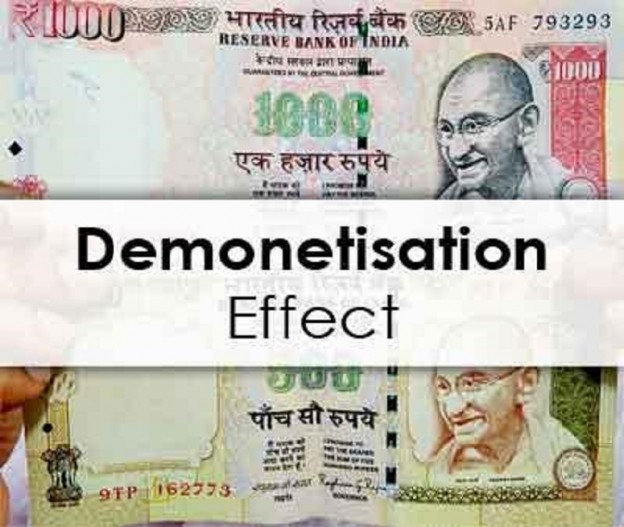
Gone are
the days when you could buy groceries with a couple of ₹500 and ₹1000 notes,
when you could pay for anything using these notes, and when some could even use
them to store black money. On the night of the 8th of November 2016, Prime
Minister Narendra Modi declared that from 12 AM, 9th November
2016, the
₹1000 and ₹500 notes, would cease to be legal tender. And so they did. However,
the government has a solution for all those who want to make their usual
transactions using cash: the new ₹500 and ₹2000 notes.
Before we
get into pros and cons, let’s talk about its purpose-a report in 2015 stated
that Indian banks needed an immediate infusion of large amounts of cash or they
could collapse. Now that everyone is depositing money in their bank accounts
due to the demonetization, the banks got the money that they need to make up
for the hundreds of bad loans. Hence, the first purpose was fulfilled. The
second purpose was to get rid of black money, and in a short term, it has done
that very well--a man from south east India distributed INR 400 crores, and
others have burnt bags full of money. However, as declared by RBI, the new
notes don't have tracking chips, so when people will gain black money, it will
actually be easier to store and handle black money with the higher denomination
notes.
The Effects: Pros and Cons
One of the main advantages of the demonetization is the short term removal of
black money. This also means that any illegal activity that uses black money
will also be temporarily be demolished. Once the tracking chips will be put
into notes, black money can be easily tracked. another advantage is people who
will declare their black money will have to pay high taxes on it, meaning that
the government will earn loads of revenue. Also, when people deposit money into
their bank accounts, the banks will get the money that they needed to keep from
going bankrupt, thus keeping the economy stable. Moreover, the demonetization
is a move towards digital India and promotes the usage of plastic money.
On the
other hand, this has a darker side; the first one being inconvenience - a lot
of it. Although efforts are being made to make the new notes available to
everyone, there isn't much of a difference. Every single day, the death toll
rises, while some people just manage to get away with fainting while waiting in
queues. Not all the ATM's were calibrated to dispense the new notes, causing
further inconvenience. There are also news reports mentioning that people are
using Jan Dhan accounts to convert black money to white by depositing money in
them and later transferring the money into their own accounts. Another
disadvantage is that if people have stored their black money in the form of
assets, like gold, they won't be affected. Besides, suddenly having to change
the notes and reprinting them would have costed the government a lot of money,
and it is also believed that it will take about seven months to reprint all the
money, which leads several people to think that there was a lack of planning by
the government.
It might take quite some time for normalcy to return to the banks as
there are so many people out there waiting every day to deposit or
convert the money that they have. In such crucial situations, digital
payments do come handy.

Digital payments are beneficial for all parties. The consumers can save time that they spend on rummaging for exact change or standing in ATM queues. With cashless payments, customers can just swipe a bank card or use mobile apps. Business owners can save the money that they would have otherwise spent in cash handling. Furthermore, they also gain more information on their customers. For both consumers and merchants, digital transactions will help in reducing point-of-sale time. Thus merchants will be able to provide a more effective service.
What’s more, the economy of our country will also reap benefits because it will be easier for the Government to track taxes when the transaction and receipts are digital.
However, the government has obviously taken this drastic step based on a cost-benefit analysis, and there must be more than meets the eye. Let us wait for the dust to settle, and look forward to a better India.
PS: This
was written in late November, so some details may not match the current
situation.
Comments
Post a Comment